
As a former police investigator, I learned long ago that intimate partner violence crimes are layered with complexity. From my perspective, it was always important to recognize that those living in an abusive relationship may experience many emotions, from fear to hate, to love for the person they thought they chose, to hope, to despair, to life-sucking hopelessness that bleeds away their capacity to act or even to know they should act.
As much as many of us wish the world were black and white, and “just say no” or “just leave” were as simple as the phrases suggest, this simplicity does not describe the reality many victims face. Many who suffer abuse at the hands of a loved one need help to take that first brave step, and this also requires courage from empathetic onlookers who have patiently waited for the moment to step in and support.
It is crucial to understand that abusive relationships do not always involve physical or sexual violence. In some cases, a spouse may use only words to control or “gas light” their partner through statements like, “No one would ever tolerate you like I do,” or “If you leave, I will kill myself,” or worse, “I will kill you.” These threats are intended to coerce the other person to stay and often cause individuals to remain in these types of unhealthy, unhappy relationships for a long time.
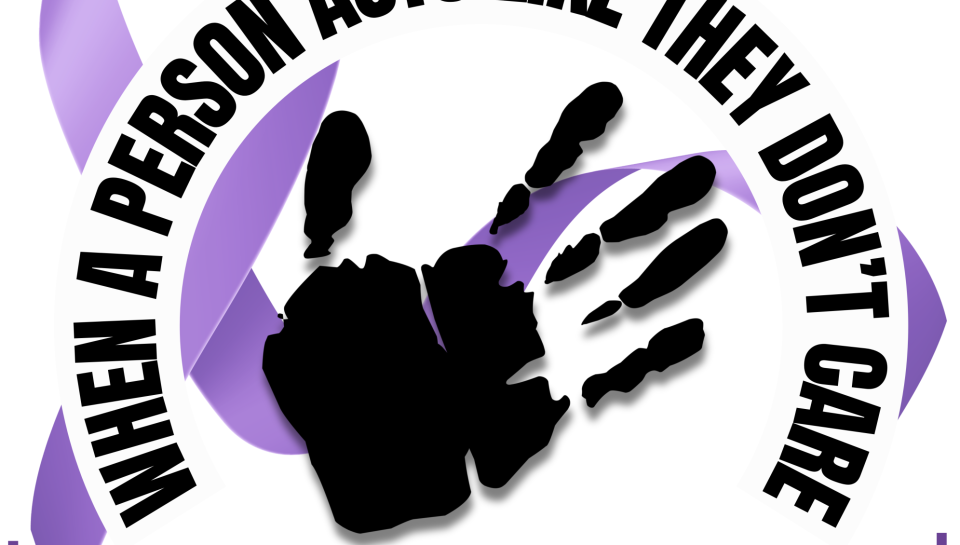
Don’t dismiss statements like these. The truth is, when a person acts like they don’t care, believe them; these expressions, in some cases, can become the precursors of worse things to come.
A chilling example of this came one spring more than a decade ago. A young gal had just separated from her boyfriend, with whom she shared a child. From the outset, the breakup was tumultuous. Through the rollercoaster of this drama, the women in this story met a new fellow, a nice guy with whom she fell in love. But the ex did not take this new love interest well. Days before the woman was slain, an ominous message appeared, scrawled onto the doorway of her home. Stay Away! On the eve of her death, the ex recorded a threat on her answering machine: “I’m going all the way, all the way. You can laugh about it now … but I promise you won’t be laughing soon. I am the best there was, the best there is, the best there ever will be.”
Left unreported, the following morning, she was dead. The ex had slit her throat and left her to die on the back patio of her home.
Sadly, this type of tragedy is not a one-off, and this victim’s story had several parallels to another murder I investigated a few years later. In this case, the husband again uttered threats, which were left unchecked. Again, they came in the form of a handwritten note, this time left in black marker scrawled crudely on the wall near the front door of the home:
“Don’t come back here, Stacy, or this will be your head,”
Beside the message were two fist-shaped holes in the drywall. Days later, his wife was found bludgeoned to death, under a pile of dirty laundry, in the basement of their home after returning back.
When a person acts like they don’t care-believe them.
But not every partner will express their intent through a written or spoken warning. Sometimes the warning signs before a murder are harder to notice at first glance, as was the case in the next crime from my memory of dozens of similar cases I had a hand in investigating over the years.
It was early one winter morning when my phone rang. My boss started the conversation like he always did.
“We have a homicide. See you at the office.”
Click.
It took me a few moments to un-blur from the sudden wake-up, but over the years I had developed strategies to resist the urge to fall back asleep immediately. My phone was never within reach on my bedside table, forcing me to get out from under the warm covers to answer it and giving my foggy mind a chance to clear. Back then, I also kept a clean suit and pressed shirt hanging ready in the bathroom so I wouldn’t disturb the house while I scrambled around to get ready in the dead of the night.
Out of the shower and on my way to the office, I would slurp back a caffeinated beverage and wonder what it would be this time. In this instance, it was a barely twenty-year-old girl who was gunned down in a gravel car park behind a residence, which would later be identified as our suspect’s home. A barely twenty-something boy himself, jealous after his break-up with the victim, had killed her. If he couldn’t have her, nobody else would either.
When the intricacies of love, jealousy, and hate intertwine, they can produce appalling brutality when an intimate partner turns into a killer. How did this young man come to see love as something demanded and subject to lethal reprimand? How might his life and hers have differed if he had viewed love as something beyond possession and control? It made me reflect—love requires the freedom to trust that someone will stay, and if they don’t, the freedom to accept that a relationship has run its course.
It seems like a simple idea, but this concept often gets distorted, especially by those who use threat tactics to “manage” their relationships. It may seem overly simplified, but trusting the natural flow of life and relationships could save many of us from a lot of unnecessary hurt.
In this case, if the young man who had proclaimed his love for the innocent victim mere days earlier had been able to muster the courage to press the release button, it would have been the most loving gift he could have given her. I can’t help but imagine that if he had chosen unconditional release, a part of him would likely have remained in her heart forever.
I believe that when a person can leave an unhealthy relationship, they are making a courageous choice to unshackle themselves from whatever has been holding them back.
A social worker who worked with survivors of intimate partner violence once shared this point to me. In her work with these women, she found it difficult for most of them to develop the willingness to trust men again—a significantly different fear from the one they had to overcome in leaving an abusive life. There were various reasons for this, but one key reason was that they had lost the ability to recognize what healthy qualities look like in a normal relationship. She asked me what I thought could help these women move past their learned fear of men.
I pondered her question for a minute and then responded. For me, it isn’t words but actions that are the most reliable communication of intent. People can say whatever they like, whenever they like, but it is what they do that provides a true glimpse into their hearts. For example, a man can tell his partner a hundred times over that he loves her, all the while dragging her along the kitchen floor by her hair and punching her in the face. Such actions have nothing to do with love at all; they are all about violence and control. But if a man, without speaking a word, holds her hand when she is near; if he kisses her forehead just because; if he smiles when he looks her way or shares in the chores and functioning of the home, then this is a person whose heart one might be able to put trust in again.
Made sense to me, anyway. Hopefully, that may make sense to you as well.
In the end, I believe it’s incumbent upon all of us to do better and be better in raising awareness about the devastating consequences and grim statistics of intimate partner violence in Canada as well as globally. Did you know?
- In 2022, 184 women and girls were murdered. That equates to one woman or girl killed every 48 hours in Canada (Canadian Femicide Observatory for Justice and Accountability, 2022).
- 30% of all women age 15 or older report experiencing sexual assault at least once in their lifetime.
- It is estimated that 44% of women or 6.2 million women aged 15 and older have experienced some form of abuse in their intimate relationships (Government of Canada, 2022).
- Women are 75x more likely to be murdered by their intimate partner in the 3 weeks after leaving that partner.
- Indigenous women are 12 times more likely to be murdered or go missing than any other woman in Canada. (Reclaiming Power and Place: The Final Report of the National Inquiry into MMIWG)
- Women and girls are more than twice as likely to be victims of family violence as men and boys [457 victims compared with 212 per 100,000 population](Statistics Canada, 2022).
- The rate of victimization for women and girls is nearly 4x higher for intimate partner violence (Statistics Canada, 2022).
And, domestic violence isn’t just happening behind closed doors at home. It can also carry over into the workplace, threatening a person’s ability to maintain economic independence.
- More than half (53% of study respondents who experienced domestic violence said that at least one type of abusive act happened at or near their workplace.
- Almost 40% of those who had experienced domestic abuse said it made it difficult for them to get to work, and 8.5% said that they lost their jobs because of it (Jennifer C.D. MacGregor et al., Safety and Health at Work, 2016).
So, what can you do today to help break the cycle?
I believe it all starts with having those essential conversations—talking with our sons, co-workers, friends, and acquaintances about the importance of understanding the stakes involved in intimate partner violence. It also involves speaking out when we see or hear things that are not right. Recognizing that this can be difficult, it is also necessary if we want to create safe communities for everyone.
It also involves having meaningful conversations with our children and instilling belief and confidence in them so they understand how special they are. This instilled confidence is what they will draw strength from one day, should they ever be among the 1 in 4 women or 212 boys (per 100,000) who face abuse at some point in their lives.
Lastly, it requires both men and women to work more collaboratively, leading by example to show our sons and daughters what healthy, loving partnerships look like, so they can learn from us and our example.
Thanks for stopping in. If you believe you need help, reach out to a family member, friend or emergency support today-they have been anxiously waiting your call, believe me.
And if you are a person who thinks you may be trending in the direction of an abuser, also seek help; there are many resources available to help support you before you make a life-altering decision for you or someone you love. It is the greatest gift you can give the important people in your life, which includes you. Remember:
When a person acts like they don’t care- believe them.