
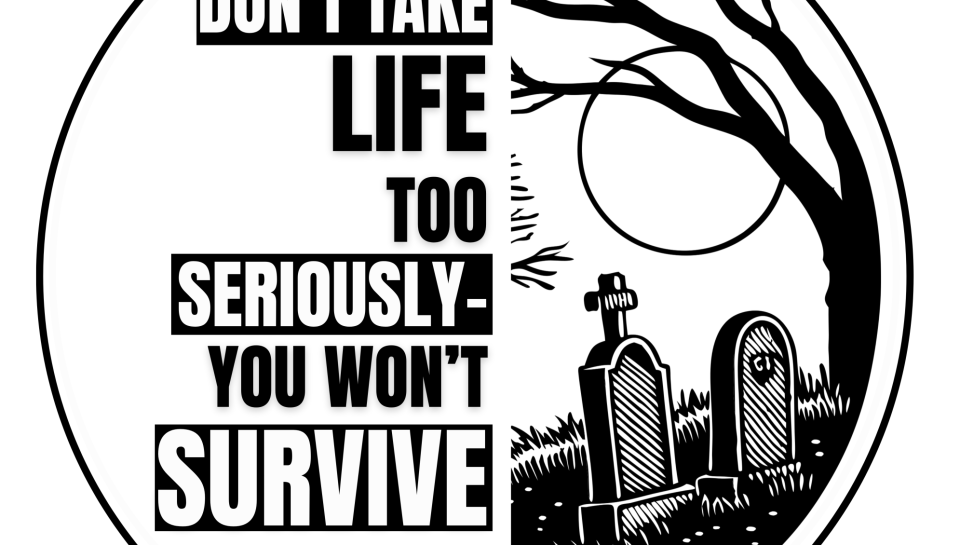
One thing about living is none of us will survive it, and that reality should remind each of us every day to roll more with the punches instead of trying to fight each one thrown our way.
But, beyond that, being too serious throughout life can often add to the stress of it; it can affect how we handle and adapt to crisis or change and it can influence how others approach and like us.
According to Author and Psychologist Robert Cialdini, there are three important factors that aid our likability with others: people who we share common ground with, who pay us compliments, and people who agree with us. To emphasize his point, Cialdini cited a study in his video The Science of Persuasion, which found that business persons who met with prospective business associates were ninety percent more likely to close the deal if both sides spent time getting to know each other on a personal level through connection and communication. Those who approached the same scenario with a level of seriousness and an attitude that time was money had only a 50% chance of closing that same deal.
From my experience as a former investigator who spent thousands of hours in the interview room interviewing homicide suspects, I agree with Cialdini’s theory that these three factors absolutely increased likability, but I will add another—the ability to laugh at oneself and use self-deprecating humor-even in the most serious of environments.
During my career I was grateful to have been surrounded by a team of talented investigators who also approached interviewing exactly this way; and I watched many of my former colleagues exploit humor and joke with suspects throughout their time with them right up until a confession. Reflecting on this tactic today, one officer I knew stood out as an expert at this. Through his actions and jovial nature, he impressed upon us daily:
Don’t Take Life Too Seriously—You Won’t Survive It.
In the interview room, his riffs on his receding hairline and his commentary on not missing too many meals built a rapport with a suspect not soon forgotten. So, after giving an empathetic ear as a funny, likable cop, even the most seasoned criminals were persuaded to at least listen to him in the interview suite.
Inspired by watching him, I knew I had to come up with my own simple shtick to make others smile and build that positive presence in the same environment: wearing bold, sometimes obscenely colorful socks became my trick. This produced unexpected humor and helped me connect with many different people over the years. I often watched individuals go from crying to smiling or angry to sometimes even laughing out loud when they got a glimpse of my vibrant rainbow stripes or pink pigs peeking out from the bottom of my suit pants. The socks became a jump-off point; they introduced that bit of levity and respite even on those darkest days. Discussions on why I would wear this often-embarrassing apparel sometimes helped build the necessary rapport with a bad guy, and for some victim families, the socks became strangely meaningful—as proven by their frequent requests over the years to roll up my pant leg and reveal that day’s fashion blasphemy. In turn, my efforts at gentle humor were welcomed for the smiles and laughs the socks generated, and as a result, I was rewarded with a steady stream of new pairs for my collection. It was a reciprocal gesture for creating this positive, unexpected, light-hearted moment in a day spent investigating some of the most serious crimes.
Life’s brevity should remind us that rigidity and excessive seriousness only amplify stress and hinder meaningful connections. In high-stakes environments like criminal investigations, rapport isn’t built through intimidation or a serious look but through authenticity and levity. Whether it’s a witty remark or a pair of outrageous socks, these small gestures truly did create trust and humanize even the most difficult interactions. So, embrace humor, lighten the load, and remember: Don’t take life too seriously—you won’t survive it. None of us will.
D